

A bus trip file can contain the right records and still be difficult to use if VAT paperwork, route information and journey records are kept separately. Organising Slovenia bus trip tax documents by trip stage connects each record to the task it supports and makes missing or inconsistent details easier to spot.
It can be unclear which documents to prepare before departure, which journey details to record during travel and what information to assemble for reporting afterwards. This guide offers a practical way to build a trip-specific file and explains how VAT records, route reports and journey details fit into the process.
Use the before, during and after steps below to organise trip information and identify what needs review. Requirements and deadlines can depend on the operator and transport arrangement, so verify the details against current Slovenian guidance. A route report prepared before travel and tax reporting after a journey can form part of an orderly document workflow.
Key Takeaways
- Organise Slovenia bus trip tax documents by trip stage so each record has a clear purpose and place in the file.
- Keep VAT registration information separate from route details because these records support different administrative tasks.
- Record journey changes consistently so the trip file reflects the transport actually operated.
- Use a route report for pre-trip administration and assemble relevant journey information for tax reporting after travel.
- Apply a before, during and after checklist, then verify which documents and deadlines apply to the operator and transport arrangement.
Slovenia Bus Trip Tax Documents: What the Document Set Is For
A trip tax-document file brings together company and journey records for administration before a bus trip in Slovenia and for reporting afterwards. It is not one universal form or a substitute for every operational document. The records relevant to a trip can depend on the operator and transport arrangement, so distinguish practical record-keeping from legal requirements that apply to a specific case.
Before travel, company and route records support preparation; during the journey, trip details help document what took place; after travel, relevant information supports tax reporting. This is the organising principle behind useful Slovenia bus trip tax documents: each record should have a clear purpose and connect to the correct trip.
Which records are tax-related and which are operational?
Keep tax records distinct from the broader paperwork used to operate a bus safely and lawfully. This makes relevant information easier to find without treating every document carried on board as a tax record.
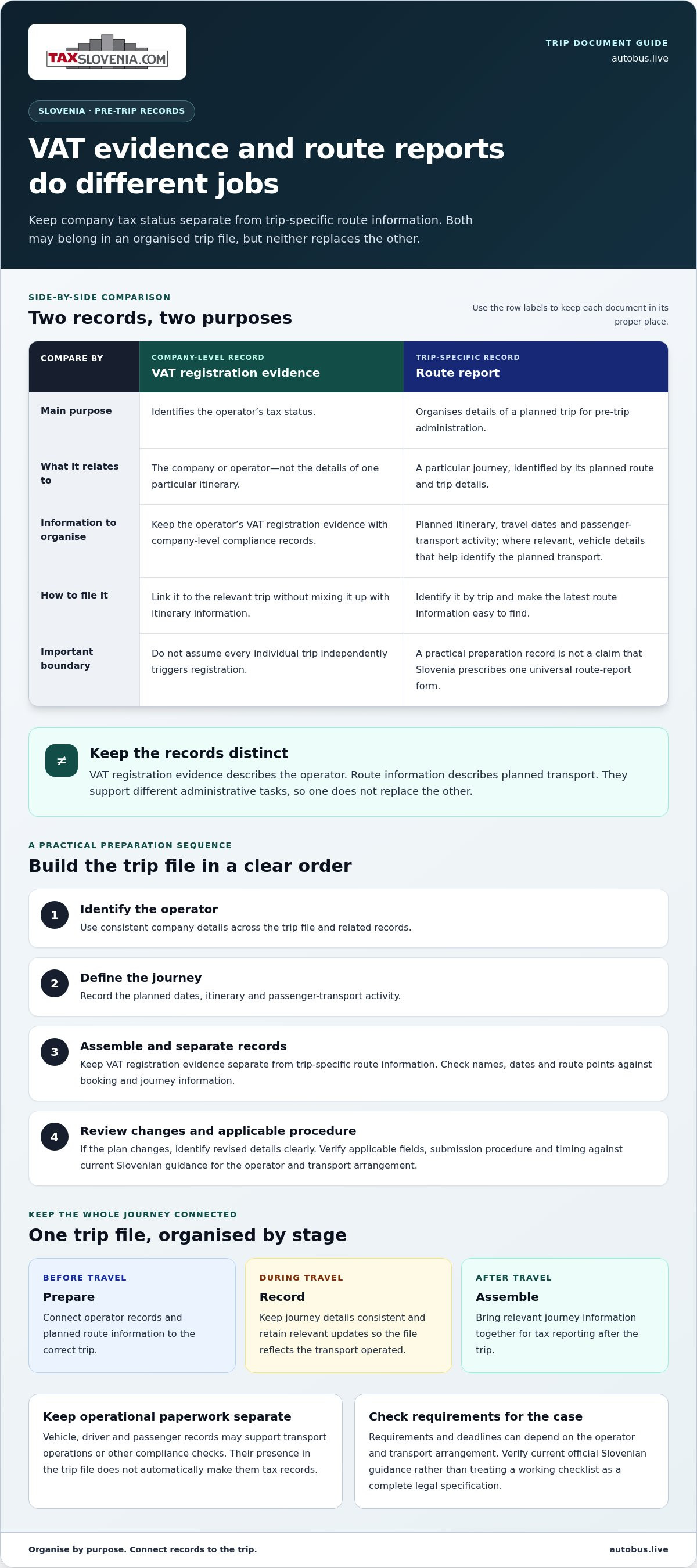
- Company-level tax information: VAT registration evidence identifies the operator’s tax status. It relates to the company, not the details of a particular itinerary.
- Trip-specific route information: The planned route and journey details can support pre-trip administration. Identify them by trip so they can be compared with records of the journey actually operated.
- Operational paperwork: Vehicle, driver and passenger records belong in a separate category. They may be relevant to transport operations or other compliance checks, but their presence in the trip file does not automatically make them tax records.
These categories sit within the wider EU VAT system. A general overview of that system provides background, but does not establish which documents apply to an individual Slovenian journey. Use current Slovenian guidance to determine the requirements for the trip.
Why a Slovenia trip needs a clearly organised file
A consistent file connects the operator and planned transport with the details recorded during and after the journey. If a route or date changes, a clear record helps distinguish the original plan from the journey that took place. That gives the reporting process a traceable basis without assuming that every recorded detail is a formal filing requirement.
Use a simple trip reference and organise records around the operator, journey dates, route and transport activity. Keep the latest route information easy to identify, retain relevant updates with the trip record and avoid mixing paperwork for separate journeys. Before treating an item as mandatory, check current official Slovenian guidance against the operator’s circumstances and transport arrangement.
Before a Slovenia Bus Trip: Organise VAT and Route Information
Pre-trip preparation works best as a short sequence: identify the operator, define the journey, gather relevant company and trip information, then check which requirements apply. This separates records that describe the business from information about a particular transport activity. It also gives staff a consistent starting point for preparing the route report and retaining information for later reporting.
A route report and VAT registration evidence are distinct records with different functions. VAT registration evidence relates to the operator’s tax status. A route report concerns a planned trip and its details. Neither replaces the other, and the records relevant to an operator depend on its circumstances and transport arrangement.
What information should operators assemble for a route report?
Start with enough information to identify the company and distinguish the trip from other journeys. Assemble the operator’s identifying and VAT details, the planned itinerary, travel dates and a clear description of the passenger-transport activity. Where relevant, note vehicle details that help identify the planned transport. These are practical preparation inputs, not a claim that Slovenia prescribes one universal route-report form.
Check names, dates and route points against the operator’s booking and journey information before preparing the report. If the plan changes, identify the revised details clearly rather than leaving conflicting versions in the trip file. A Slovenia route report prepared before travel helps organise trip-specific details. Verify the applicable fields, submission procedure and timing against current Slovenian guidance for the operator and arrangement.
The Slovenian Ministry of Finance provides official information about Slovenia’s tax and customs systems. Use current guidance to check applicable fields and procedures rather than treating an example checklist as a complete legal specification.
How VAT registration evidence fits into pre-trip planning
Keep evidence of VAT registration with company-level compliance records, then link it to the relevant trip without confusing it with itinerary information. An operator’s registration status may be relevant to its Slovenian tax administration, but whether registration is required depends on the applicable rules and the operator’s circumstances. Do not assume that every individual trip independently triggers registration.
For a clear working file, complete these steps in order:
- Identify the operator. Use consistent company details across the trip file and related records.
- Define the journey. Record the planned dates, itinerary and passenger-transport activity.
- Assemble records. Keep VAT registration evidence separate from trip-specific route information.
- Check requirements. Verify applicable fields and submission procedures using current Slovenian official sources.
For process-specific detail, consult a separate guide to VAT registration in Slovenia. Operators preparing pre-trip documentation can also use a Slovenia route report to organise route information for the journey.
During a Slovenia Journey: Keep Trip Records Consistent
During travel, maintain a working record of the journey as it actually takes place, not just the itinerary prepared before departure. This connects the planned trip with the information later used for reporting. Keep records for each trip together and make current details easy to distinguish from earlier versions.
The aim is traceability, not paperwork for its own sake. If the planned route or schedule changes, a dated note and updated itinerary can help explain why the completed journey differs from the original plan. Consistent records also make mismatches easier to identify before trip information is used to prepare a tax report.
Which journey details should the operator track?
Use a trip folder or electronic file with a clear reference linking the initial plan, any revisions and the final journey record. Keep the following working information together where it is relevant:
- Itinerary versions: Retain the planned route and any revised version needed to explain changes.
- Journey dates: Record the dates associated with the planned and completed activity, including schedule changes.
- Transport activity: Keep relevant records that help describe the passenger-transport activity carried out.
- Trip reference: Use a consistent identifier or file name so related records can be found together.
This is a practical record-keeping approach, not a definitive statutory checklist. Check current official Slovenian guidance for the documents an operator must carry or retain and any formal record requirements for the specific transport arrangement. Keep the distinction clear: internal working notes help organise information, while legal carriage and retention requirements depend on the applicable rules.
How should operators record trip changes?
When a material change occurs, note when it was made, what changed and which itinerary version reflects the update. For example, if the route or planned schedule is revised, retain the earlier plan where it helps explain the difference and mark the version that represents the journey ultimately operated. Avoid silently replacing the original file, which can make later reconciliation harder.
At the end of the journey, bring the final itinerary and relevant activity records together under the same trip reference. If details differ, add a short explanation rather than changing unrelated documents to make them appear identical. This gives the person preparing later reporting a clear basis for understanding what happened and which information reflects the completed journey.
For foreign operators, well-organised Slovenia bus trip tax documents depend on consistent details across the plan, updates and final records. Do not assume that a route change creates a particular notification duty. Verify any formal reporting or notification requirement, and keep operational documents separate from tax-reporting inputs while linking them to the same journey.
After a Slovenia Bus Trip: Prepare Records for Tax Reporting
After the journey, close out the trip file by comparing the route information prepared before travel with records of the journey actually operated. A pre-trip route report and a post-trip tax report serve different purposes: the route report supports preparation for a planned trip, while the tax report uses relevant information after the journey. VAT registration evidence remains a company-level record, not a replacement for either trip document.
Keeping these roles distinct makes Slovenia bus trip tax documents easier to use. Before preparing a report, bring the relevant source records together and resolve differences between the plan and completed journey. Reporting periods, deadlines, supporting records and filing procedures can depend on current Slovenian rules and the operator’s circumstances, so verify them against official guidance rather than relying on a general checklist.
| Record | Timing | Purpose | Related information |
|---|---|---|---|
| Route report | Before the trip | Supports pre-trip administration | Planned route and journey details |
| Journey records | During and after travel | Document the trip as operated | Actual dates, route changes and relevant transport activity |
| Tax report | After the journey, as applicable | Supports post-trip tax reporting | Relevant trip information and source records |
What should be checked before a post-trip tax report?
Review the completed journey details alongside the trip file. Confirm that the operator and trip are identifiable, compare planned and actual route information, and check that dates and relevant transport activity are consistent across the records. Flag missing information or unexplained differences for resolution before preparing the report. Keep changes visible rather than silently overwriting the earlier record.
This review is an administrative check, not a determination of which documents are legally required. Verify the applicable reporting period, deadline, supporting records and submission process against current Slovenian guidance for the specific transport arrangement. Do not apply a deadline from another period or assume that the same requirements fit every operator.
How to keep a usable archive for later reporting
Group records by operator, then by journey date or a consistent trip reference. Keep the planned route, updates, final journey information and records used to prepare reporting together, with clear file names showing what each item represents. Retain source material alongside information derived from it so a later review can trace how trip details were used.
Set an archive process that preserves relevant records and makes them retrievable. Verify applicable retention periods through current official guidance instead of relying on an assumed number of years. For support preparing a Slovenia tax report, bring together the journey information and supporting records needed for reporting.
A Practical Slovenia Bus Trip Document Checklist and Next Steps
A trip-specific checklist helps transport administrators connect company records, route details and later reporting inputs without treating every operational paper as a tax document. Use the categories below to organise the file, then check current Slovenian requirements for the operator and transport arrangement before dispatch. The checklist is a working aid, not a definitive statement that every item is legally required for every trip.
A three-stage document check for transport administrators
Work through the file in order. Before departure, organise the operator’s information, VAT status and planned route details. During travel, keep records aligned with the journey as operated. After travel, reconcile the records and prepare relevant information for tax reporting. These labels describe each item’s practical role, not its legal status.
- Before travel: Company information. Keep the operator’s identifying details and available VAT registration evidence together in the company section of the trip file.
- Before travel: Route information. File the planned itinerary, journey dates and relevant passenger-transport details with the route-report preparation records.
- During travel: Journey record. Retain the available record of the journey operated, including relevant changes to dates, route or transport details and the final itinerary version.
- After travel: Reporting input. Bring together trip details and supporting source records relevant to preparing tax reporting.
Use a consistent trip reference at each stage so an administrator can follow the file from planning through to reporting. Before dispatch, compare the planned details with the assembled documents and check current official guidance for applicable fields, procedures and deadlines. Verify whether each document is mandatory for the specific operator and transport arrangement rather than relying on a general list.
When tax-reporting support can reduce administrative work
Once the categories are clear, specialist support can help keep pre-trip and post-trip administration distinct. TaxSlovenia supports foreign bus companies with Slovenian route reports prepared before trips and tax reporting after journeys. The operator’s trip records remain important: clear source information connects the planned route with the journey details used in later reporting.
For a practical next step, Review Slovenia bus-trip tax support for route-report preparation and post-journey tax reporting. Keep the resulting records with the trip file, organised by operator and journey, so the information can be retrieved when needed.
Make Your Next Slovenia Trip Easier to Administer
Make the document process a repeatable part of trip planning. A consistent file gives your team a practical starting point for the next journey and makes it easier to identify what needs updating before dispatch. Keep current Slovenian requirements in view, since applicable records and procedures can depend on the operator and transport arrangement.
If preparing Slovenia bus trip tax documents takes time away from transport administration, TaxSlovenia can help with route reports before trips and tax reporting after bus journeys. Support is available in English, German, Slovene and Croatian, so your team can work through the process in a suitable language.
Review Slovenia bus-trip tax support to take the next step with your trip administration. A clear process can help your team prepare with greater confidence.
Frequently Asked Questions
Is a Slovenia bus route report the same as a VAT return?
No. A route report relates to trip preparation, while a VAT return is a tax filing used to report VAT information under the applicable rules. They serve different purposes and should not be treated as interchangeable. Keep the route report with the journey records and the return with the relevant tax-reporting records. Confirm the current filing process and required information for the operator’s circumstances through Slovenian official guidance.
Can one document checklist cover every bus trip in Slovenia?
One checklist can provide a consistent starting point, but it cannot determine every trip’s requirements. Applicable records may depend on the operator and transport arrangement. For example, a checklist can prompt staff to record whether the itinerary or operating arrangements differ from the usual trip, then direct them to verify what applies. Keep reusable checklist items separate from case-specific instructions and review those instructions before each dispatch.
How should an operator handle a route change after preparing trip documents?
Record the change clearly and keep the updated route information linked to the original trip file. Note when the change was made and which version reflects the journey that proceeded. Do not silently replace earlier information if it helps explain the difference. Whether a route change requires a formal update or notification depends on the applicable Slovenian procedure, so verify that before treating an internal note as sufficient.
Can bus-trip tax documents be stored digitally?
Digital storage can make trip records easier to organise and retrieve, but do not assume that every record may be kept only in digital form. Applicable rules may specify acceptable formats, access, retention or production requirements. Use clear file names and control changes to preserve a reliable record of each version. Before disposing of paper originals or choosing a digital-only process, verify current requirements for the specific records and operator.
Does a bus trip that crosses another country change the Slovenia document file?
It may require the operator to distinguish the Slovenian part of the journey from activity in the other country. Keep the full itinerary available, but make the relevant country, dates and transport activity identifiable in records used for Slovenia-related administration. Requirements can differ across jurisdictions. Do not assume that one country’s route or tax paperwork covers another; check the current rules that apply to each part of the trip.
Who should organise the tax documents for a foreign bus trip to Slovenia?
The transport company should assign a named administrator or team to coordinate the trip file, even if different staff prepare route and tax records. A clear handover helps prevent gaps when planning, operations and accounting are handled by separate people. Set an internal process for recording trip changes and passing completed journey information to the person preparing reports. The company can use specialist support for Slovenian route reports and tax reporting.
What should an operator do if the trip details do not match the prepared route information?
Pause report preparation long enough to identify the mismatch and determine which information reflects the journey that took place. Compare the route details with operational records, note any explanation or correction, and retain the source information rather than editing it without a trace. If the difference may affect a formal report or notification, check the applicable Slovenian procedure before filing. This helps keep the record accurate without assuming a particular legal consequence.


